

Send Inquiry
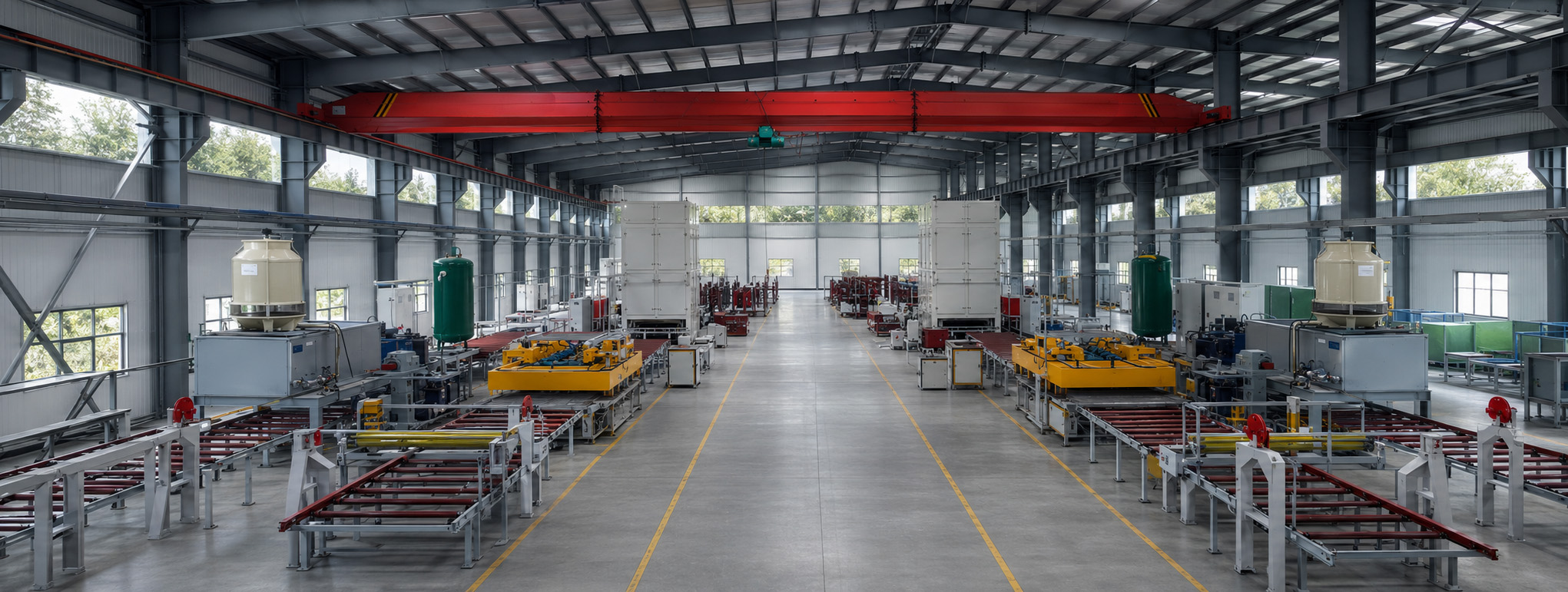
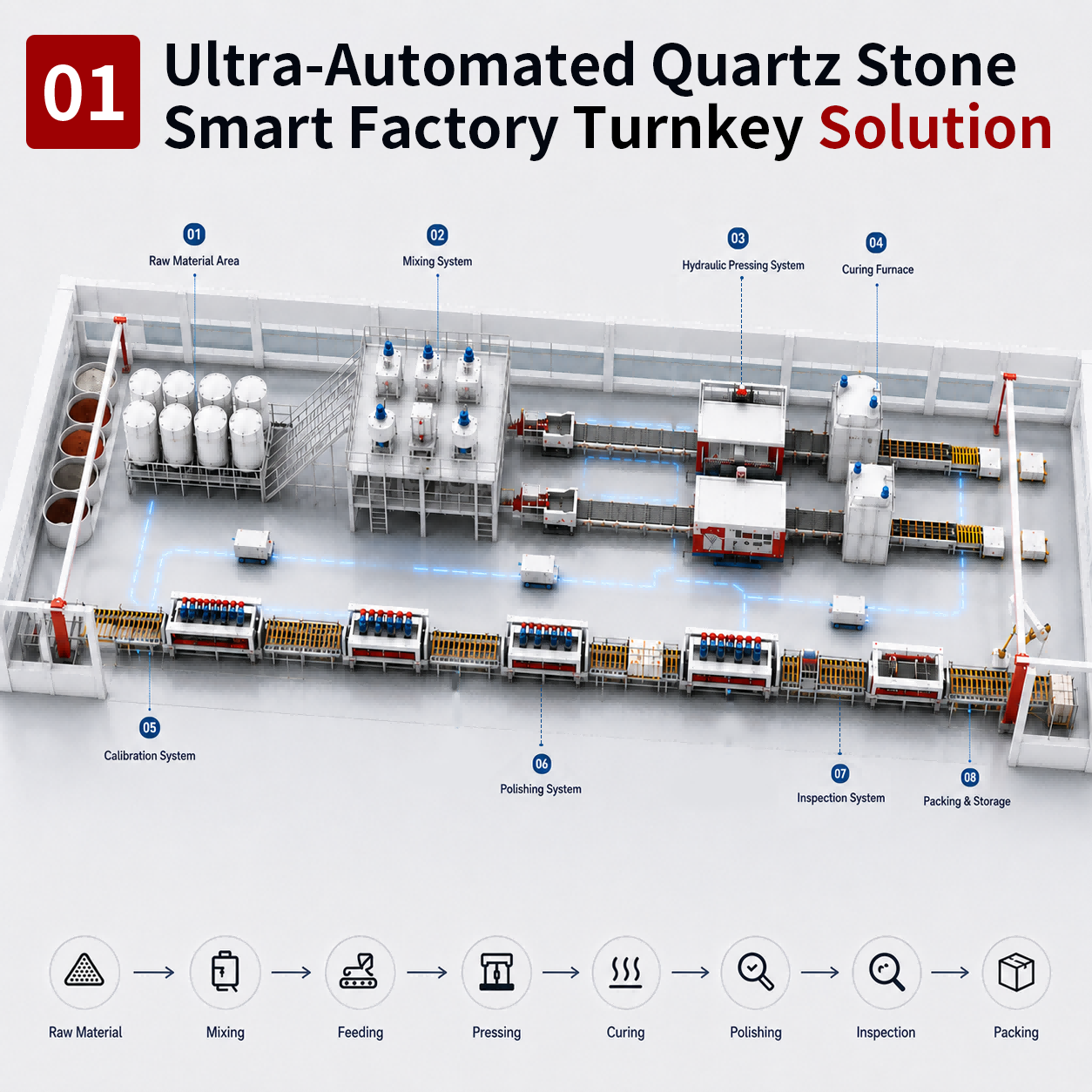
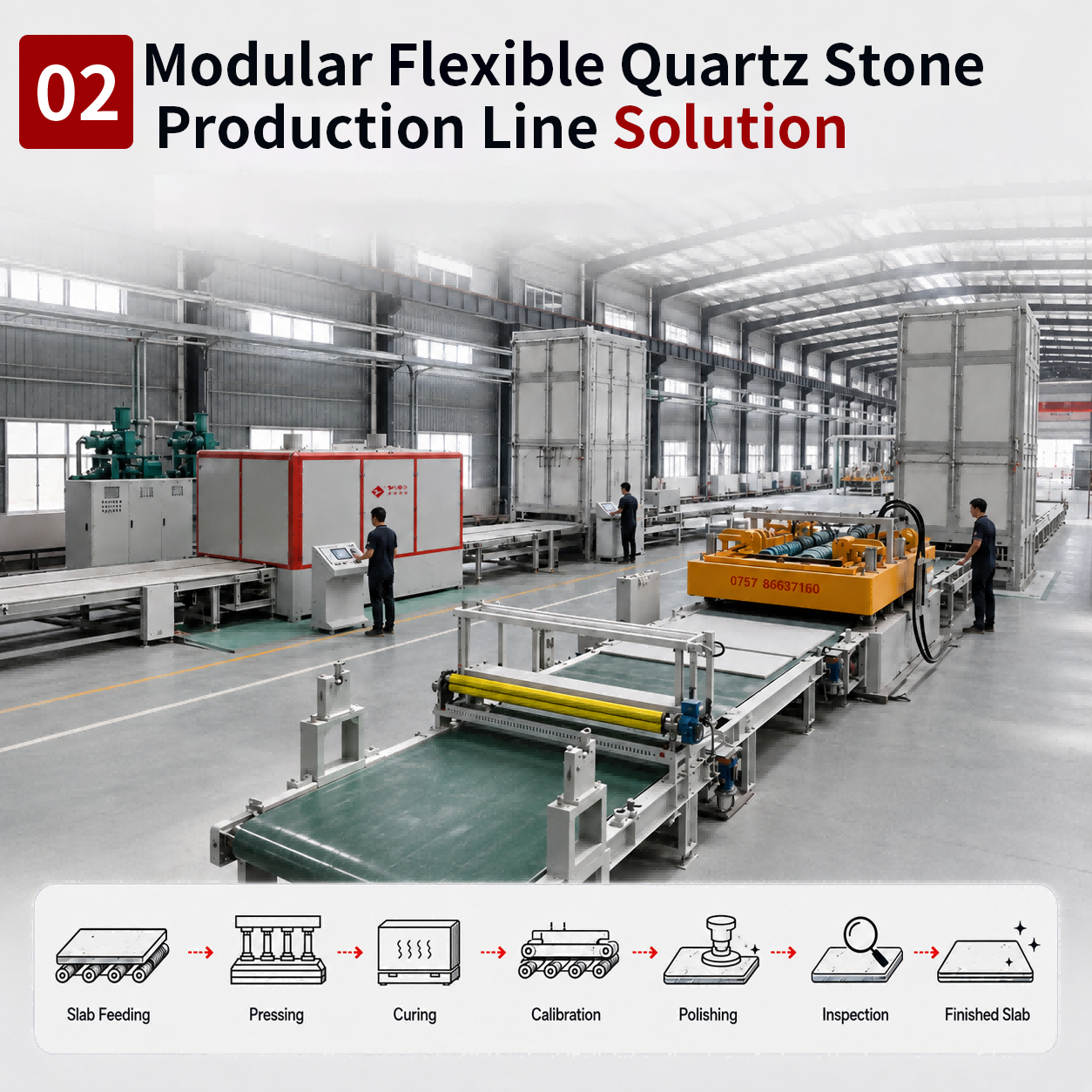
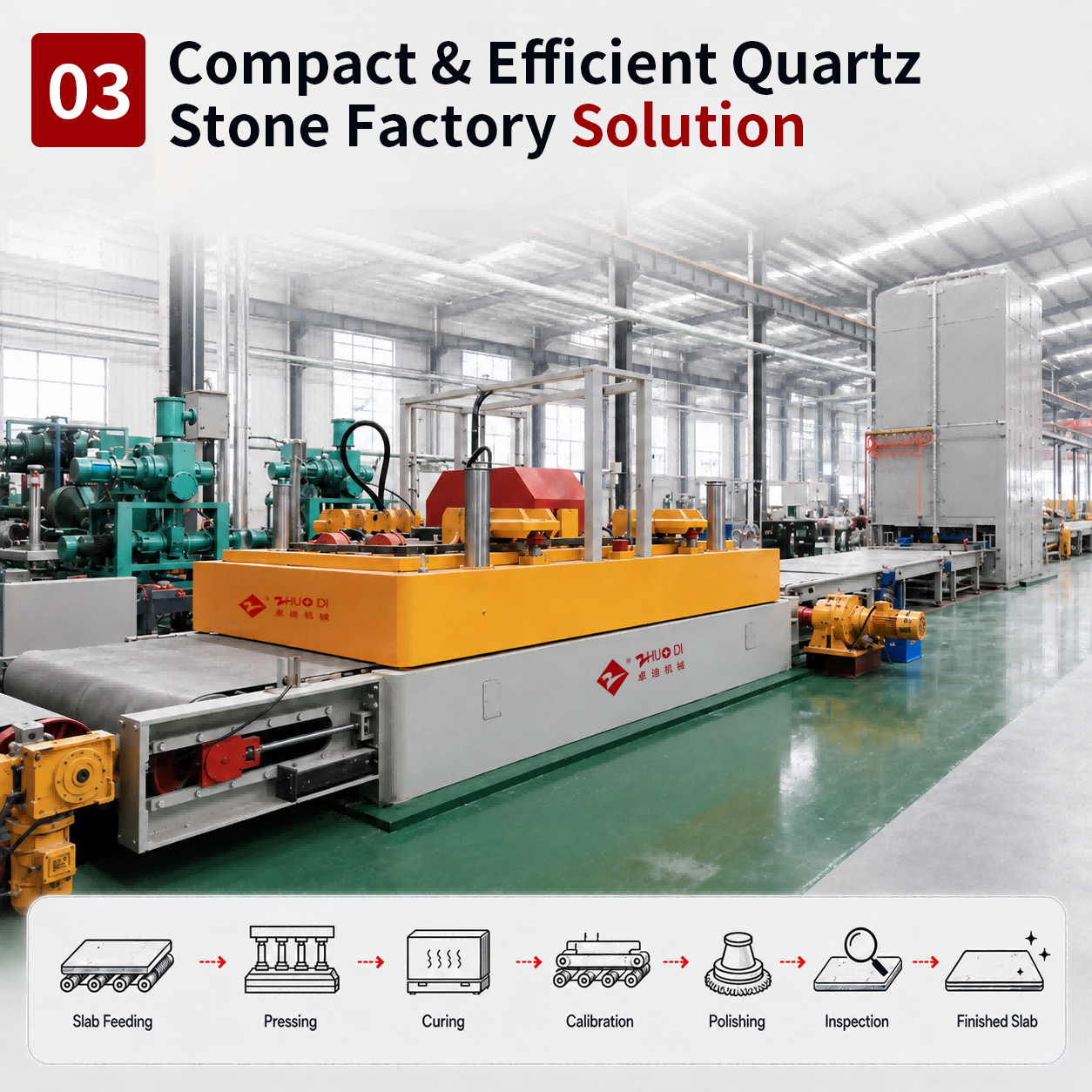
Build A Complete Quartz Stone Factory,Not Just A Production Line
Choosing a stone slab polishing line involves more than comparing machine specifications or looking at a polished sample. For buyers planning a new production line or upgrading an existing factory, a factory visit provides an opportunity to understand how the equipment performs within a real production process.
So, what should you check when visiting a stone polishing line?
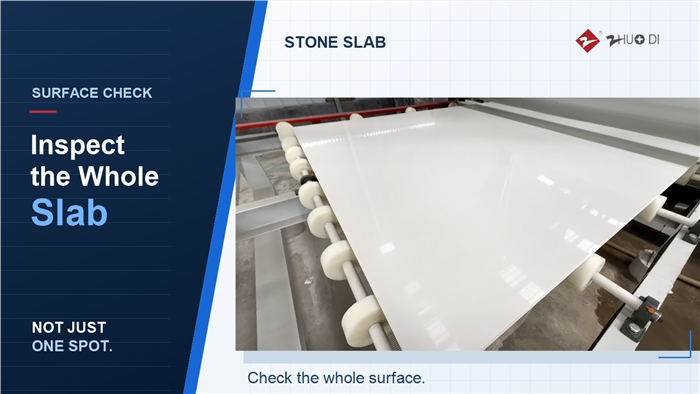
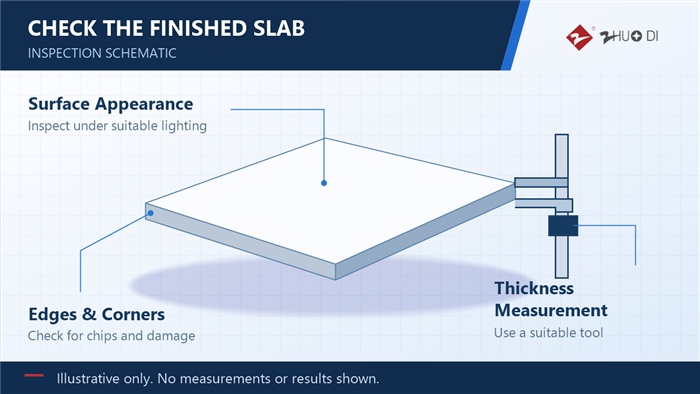
A glossy surface can look impressive under carefully selected lighting. However, one small area cannot represent the finish of an entire slab.
During an inspection, observe the slab under suitable lighting and check for visible scratches, uneven areas, or other surface conditions that may require further examination.
For a more objective assessment, agree on the inspection method and acceptance criteria with the equipment supplier before testing. Visual observation is useful, but it does not replace appropriate measurement when precise surface-quality requirements apply.
Surface finishing depends on the process as a whole. Slab thickness, incoming surface conditions, abrasive selection, machine settings and the sequence of operations may all influence the final result.
Ask how calibration and polishing are arranged in the proposed process. If a surface defect appears, the cause should be investigated rather than automatically attributed to the polishing machine alone.
A clear process plan helps buyers understand which operations are included and where quality checks should take place.
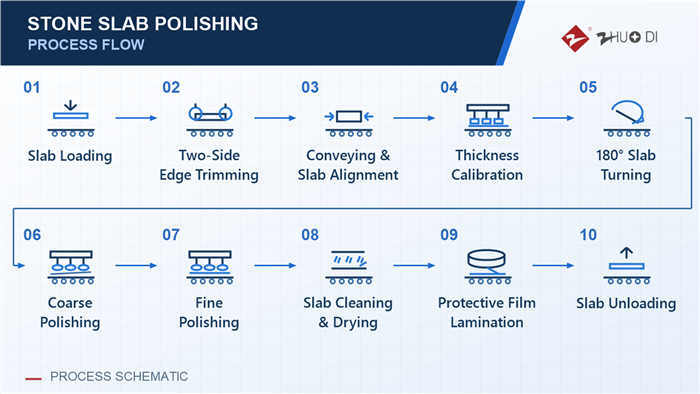
A polishing machine does not operate in isolation. Feeding equipment, conveying rollers, transfer mechanisms and discharge arrangements all affect how the production line works as a system.
During a factory visit, observe:
l How slabs enter and leave the polishing section.
l Whether conveying and transfer operations are coordinated.
l Where operators need to intervene.
l How finished slabs are moved to the next process.
l Whether the line layout suits the available factory space and workflow.
These observations can help identify questions that machine specifications alone may not answer.
A reliable inspection process should be discussed before equipment acceptance.
Ask the supplier and your production team:
l What surface defects will be checked?
l How will the inspection be performed?
l What are the agreed acceptance criteria?
l How will results be recorded?
l How will different product requirements be handled?
The appropriate method depends on the slab material, product specifications and the buyer's quality requirements. Do not rely on an undefined statement such as “high gloss” without agreeing on what it means for the actual product.
Manual adjustment is not automatically a sign of poor equipment performance. Some adjustments are part of normal production. The important questions are when adjustments are needed, why they are needed and whether the process is repeatable.
Ask which parameters operators can adjust, how the machine responds to different slab conditions, and what monitoring or alarm functions are available.
If production stability is a concern, discuss the actual operating conditions and acceptance tests with the engineering team.
Rated speed or theoretical capacity should not be treated as a guarantee of daily output.
Actual production depends on factors such as slab dimensions, product mix, operating hours, changeovers, material handling, inspection and downstream processes.
When evaluating a line, ask the supplier to explain the assumptions behind any quoted capacity. Where possible, verify performance through an agreed test using representative materials and operating conditions.
Before the visit, prepare a short checklist:
l What slab materials, widths and thicknesses will be processed?
l What surface finish and quality criteria are required?
l What operations are included in the proposed line?
l How are feeding, polishing and discharge coordinated?
l What operator adjustments are normally required?
l How are abrasives and maintenance managed?
l How will the finished product be inspected?
l What test conditions will be used for acceptance?
l What production assumptions support the capacity estimate?
l What installation, training and after-sales support are included?
The answers should be evaluated against your own factory requirements rather than used as a generic score for every production line.
The right polishing solution depends on the products you manufacture, your existing equipment, the quality requirements of your customers and the way your factory operates.
ZHUODI provides stone processing machinery and production-line solutions designed around practical manufacturing requirements. When evaluating a polishing line, our team can discuss your slab specifications, current process and production goals to help identify the questions that matter most for your project.
Planning a new polishing line or reviewing an existing one? Contact ZHUODI to discuss your production requirements.
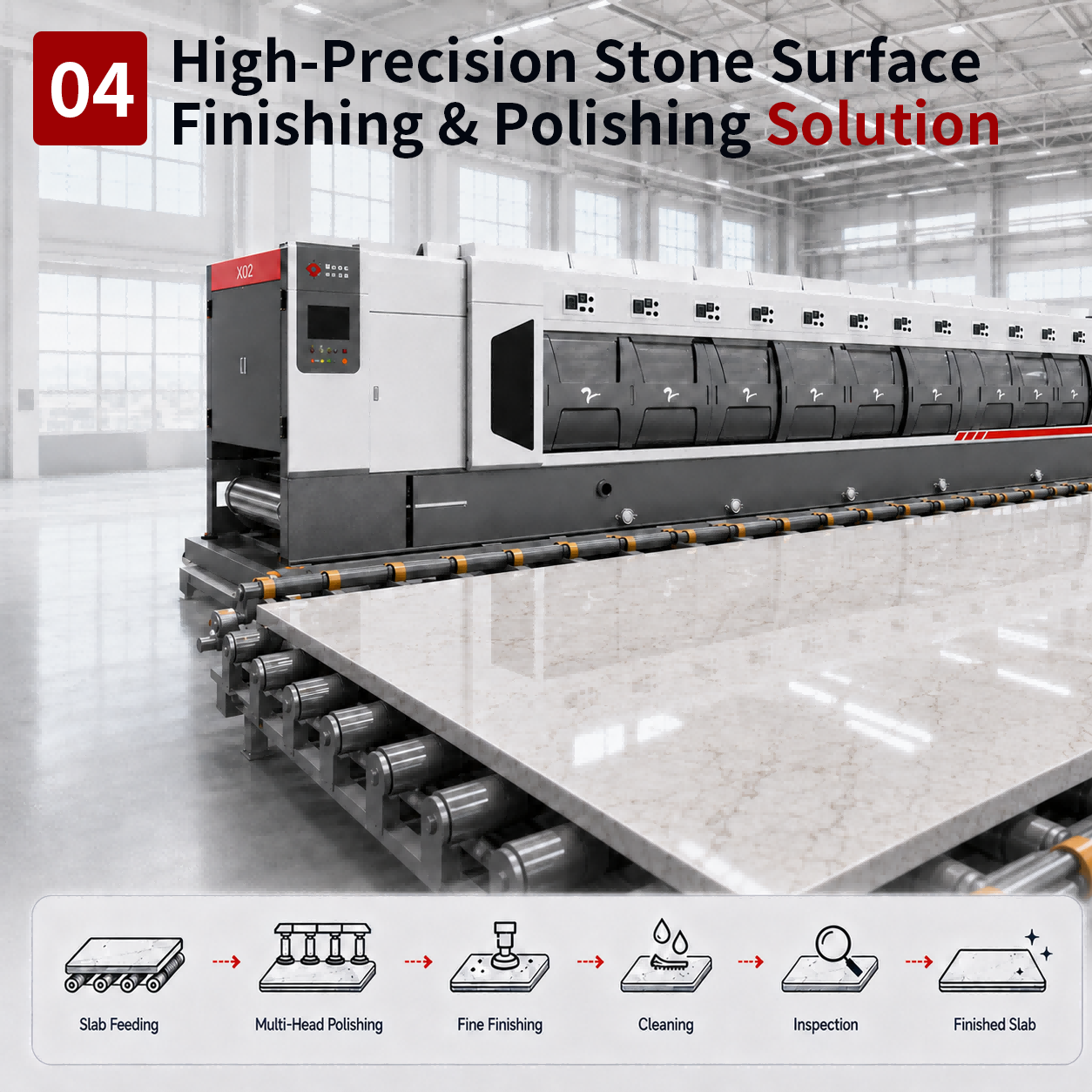
Explore our High-Precision Stone Surface Finishing & Polishing Solution to learn more about our approach to surface finishing and production-line integration.



© 2026 Zhuodi All Rights Reserved. Privacy Policy
 CONTACT