

Send Inquiry
Build A Complete Quartz Stone Factory,Not Just A Production Line
What Existing Factories Should Confirm Before Replacing Polishing Equipment
See what stone factories should consider when replacing a slab polishing machine, including workshop space, conveyor connections, slab specifications and line capacity.
Replacing a polishing machine in an operating stone factory is not simply a matter of choosing a larger machine or adding more polishing heads. The new equipment must fit the existing workshop, connect with the current conveying system and match the factory’s materials, slab specifications, surface requirements and target capacity.
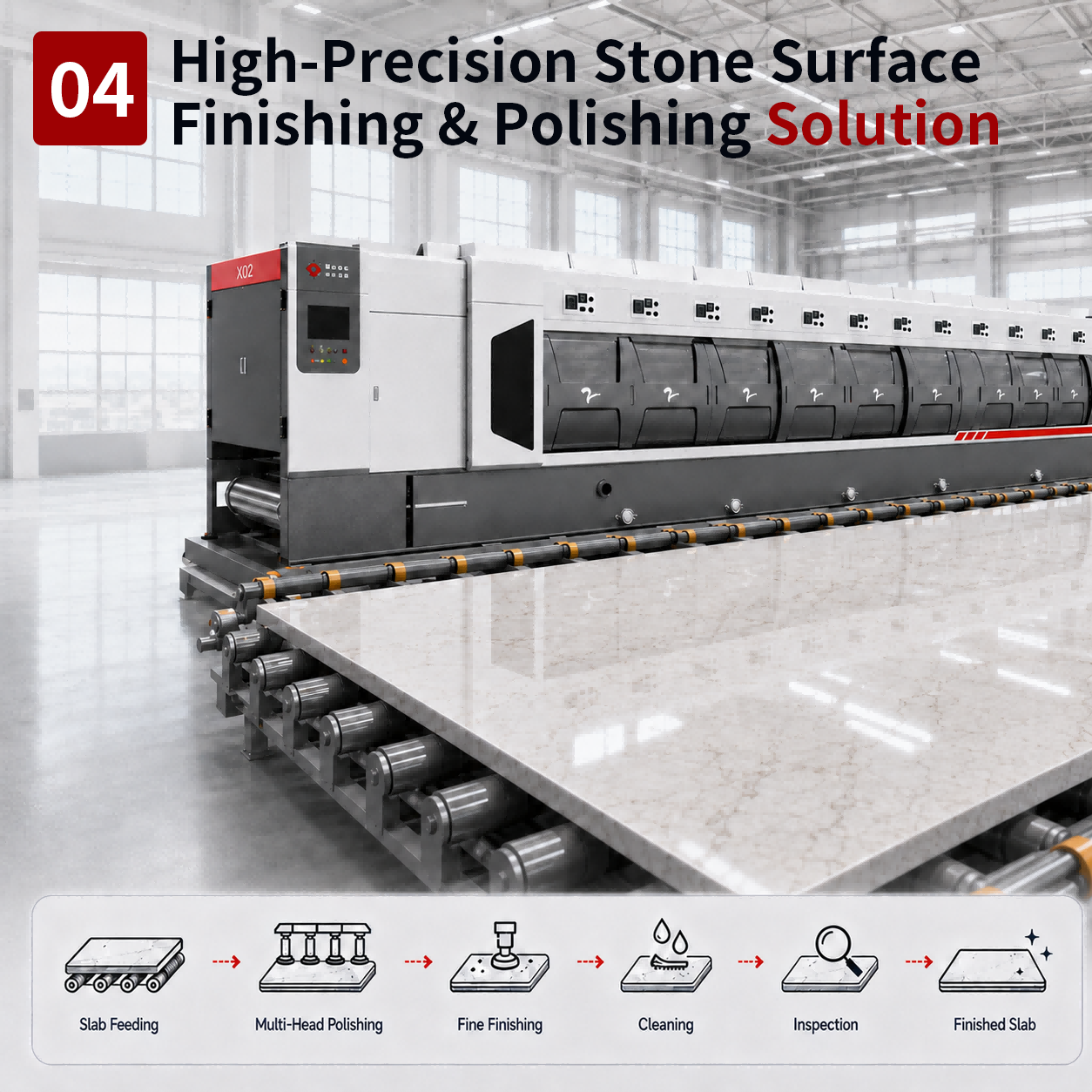
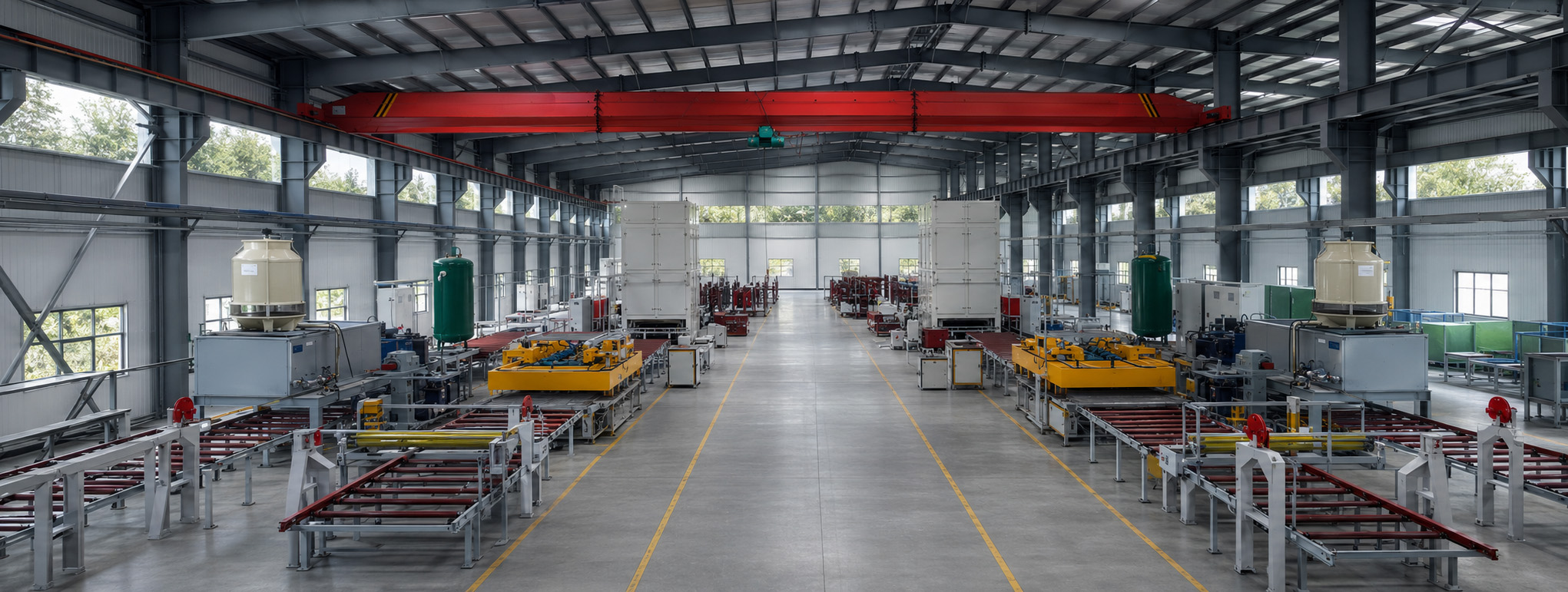
This project site shows a ZHUODI continuous slab polishing line being installed in an existing stone-processing workshop.
Installing equipment in a new factory and replacing equipment in an operating factory are two different projects.
A new factory can plan its building, foundations, utilities and material flow around the production line. An existing factory must work within fixed conditions, such as the available floor space, workshop height, conveyor position, electrical supply and surrounding equipment.
Before replacing a polishing machine, the factory therefore needs to answer several practical questions:
• Can the new machine fit inside the available workshop space?
• Can it connect with the upstream and downstream conveyors?
• Are the conveyor heights and slab-transfer directions compatible?
• Is the machine suitable for the material being processed?
• Can it handle the required slab dimensions and thicknesses?
• Does its capacity match the other stages of the production line?
• How will installation and commissioning affect current production?
These questions should be reviewed before the final equipment configuration is confirmed.
The number of polishing heads is an important machine parameter, but it does not determine whether a polishing line is suitable for a particular factory.
A machine with more polishing heads may require more installation space, a longer foundation and different conveying arrangements. Its production capacity must also be balanced with the feeding, slab-handling and downstream processes.
If the polishing machine operates faster than the surrounding equipment, the factory may still face production bottlenecks. If the machine is too large for the available workshop, installation and maintenance access may become difficult.
The right selection therefore depends on the complete production conditions—not one specification in isolation.
For an existing factory upgrade, the polishing-line configuration should be based on the following information.
Processing Material
Different stone and engineered-surface materials may require different polishing processes, abrasives and machine configurations. The equipment supplier should first understand what material the factory processes.
Slab Dimensions and Thickness
The maximum slab length, width and thickness affect the machine’s working width, conveying system and mechanical configuration.
Required Surface Finish
The required surface result influences the polishing process and the configuration of the polishing section. The factory should clearly describe its product and finish requirements before equipment selection.
Target Production Capacity
The capacity of the polishing line should match the capacity of the complete production process. Selecting a machine without considering the surrounding stages may create an unbalanced line.
Existing Workshop Conditions
The available length, width and height of the installation area should be checked. The positions of columns, stairs, electrical cabinets, walkways and other machines may also affect the final layout.
Connection With Existing Equipment
The new polishing equipment must work with the factory’s current slab-feeding and conveying arrangements. Conveyor height, direction and transfer position should be confirmed before installation.
The project photos show the continuous slab polishing equipment positioned inside an existing stone-processing workshop.
The visible configuration includes:
• A continuous slab-conveying system
• An independent electrical control cabinet
• Supporting slab-handling and processing equipment
• Access platforms and operating areas around the line
The site conditions illustrate why an equipment-upgrade project requires both machine selection and installation-layout planning.
If you are planning to replace an existing polishing machine or add new slab-polishing equipment, prepare the following information before discussing the configuration:
• Material being processed
• Maximum slab length and width
• Typical slab thickness
• Required surface finish
• Expected production capacity
• Existing equipment configuration
• Current production problems
• Available workshop dimensions
• Photos or videos of the proposed installation area
This information helps the equipment supplier understand the real operating conditions and discuss a more appropriate solution.
Does a polishing machine with more heads always provide better results?
Not necessarily. The suitable number of polishing heads depends on the material, slab specifications, required surface finish, production capacity and the configuration of the complete line.
Can a new polishing line connect with an existing conveyor?
It may be possible, but the conveyor height, width, direction, slab-transfer position and operating speed need to be checked before the equipment configuration is finalized.
What workshop information should be provided?
Provide the available installation length, width and height, together with the positions of columns, stairs, walkways, electrical cabinets and nearby equipment. Workshop photos, videos and layout drawings are also useful.
Can you recommend a configuration before issuing a quotation?
The first step is to review the material, slab specifications, target capacity and existing factory conditions. Relevant equipment and project videos can then be shared before discussing the detailed configuration.
Replacing a polishing machine should begin with the factory’s actual production conditions—not only with the machine specification sheet.
Send us your material type, slab dimensions, thickness, required capacity and photos or videos of the existing workshop. We can first share relevant project references and then discuss a configuration suitable for your factory conditions.
Next step: WhatsApp: +86 19924148525



© 2026 Zhuodi All Rights Reserved. Privacy Policy
 CONTACT