

Send Inquiry
Build A Complete Quartz Stone Factory,Not Just A Production Line
How Much Does It Cost to Build a Quartz Slab Factory in 2026?
Building a quartz slab factory in 2026 requires investment in much more than the production machines. The total cost depends on the planned production capacity, slab size, level of automation, factory building, raw material system, utilities, labor, installation, and local costs. For most investors, the right way to estimate the budget is to first define the required output and product specifications, then configure the production line accordingly.
The investment can vary significantly from one project to another. The main factors are:
· Production capacity per day
· Quartz slab size and thickness
· Number of slabs produced per cycle
· Level of automation
· Raw material storage and feeding system
· Mixing and material distribution system
· Pressing equipment
· Curing system
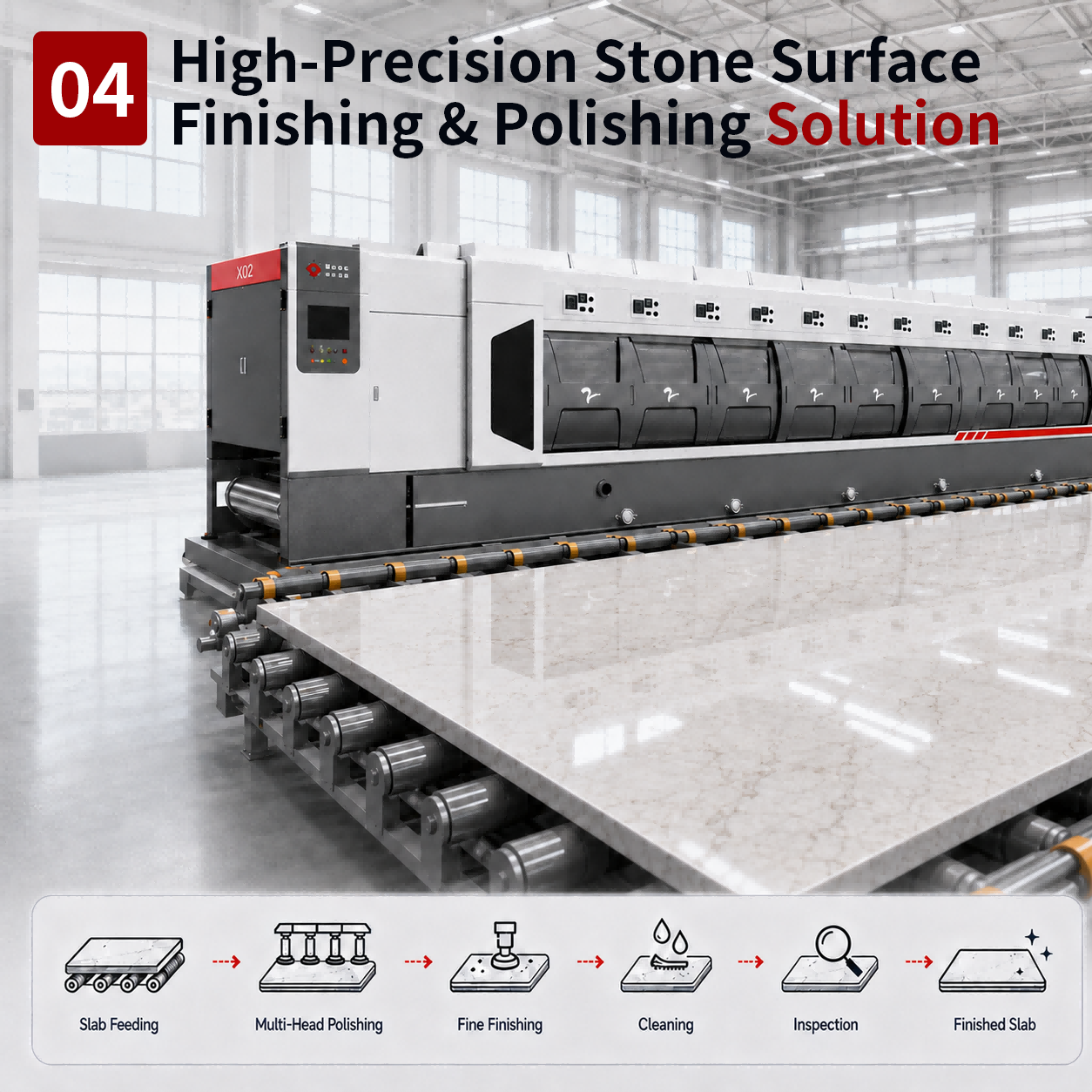
· Calibration and polishing line
· Dust collection and environmental equipment
· Factory building and foundation work
· Electricity, water and compressed air supply
· Installation and commissioning
· Labor costs in the destination country
· Shipping, customs duties and local taxes
For this reason, two factories producing the same type of quartz slab may require very different total investments.
Before asking for a complete factory price, it is useful to separate the investment into several parts.
Investment Item | What It Includes | Main Cost Driver |
Raw Material System | Storage, weighing and feeding | Capacity and automation |
Mixing System | Mixers and related feeding equipment | Number and size of mixers |
Distribution System | Material spreading and slab preparation | Slab size and process |
Pressing System | Quartz slab press and vacuum system | Press specification |
Curing System | Heating and curing equipment | Capacity and energy system |
Calibration & Polishing | Calibration, grinding and polishing equipment | Width, heads and output |
Dust Collection | Dust extraction and filtration | Factory layout and local regulations |
Utilities | Electrical, air and water systems | Installed machine power |
Factory & Foundation | Building, machine foundations and working area | Local construction cost |
Installation | Installation, commissioning and training | Project location and line complexity |
Machinery represents a major share of the investment, but it does not account for the full factory cost.
First-time investors should separate equipment costs from building, infrastructure, logistics, installation and working capital.
The first question should not be:
“How much is a quartz slab production line?”
The better question is:
“What kind of quartz slab factory do I want to build?”
Before selecting machines, determine the basic product specifications:
· Maximum slab length and width
· Typical slab thickness
· Surface finish
· Required colors and designs
· Expected daily production
· Target market
For example, a factory focused on relatively small local production does not necessarily need the same configuration as a plant designed for continuous high-volume production.
Equipment should follow the product and capacity requirements—not the other way around.
Production capacity has a direct effect on the investment.
A higher-capacity factory may require larger or additional mixers, faster material handling, greater pressing capacity, larger curing capacity and a higher-output finishing line.
A practical starting point is to classify the required capacity as follows.
Factory Type | Typical Requirement | Suitable For |
Entry-Level Line | Lower production capacity and simpler automation | New manufacturers and smaller markets |
Medium-Capacity Line | Balanced automation and production output | Established regional suppliers |
High-Capacity Line | Higher automation and continuous production | Large-scale manufacturers |
The exact capacity should be calculated according to the complete line rather than the rated output of one individual machine.
A production line is only as fast as its bottleneck.
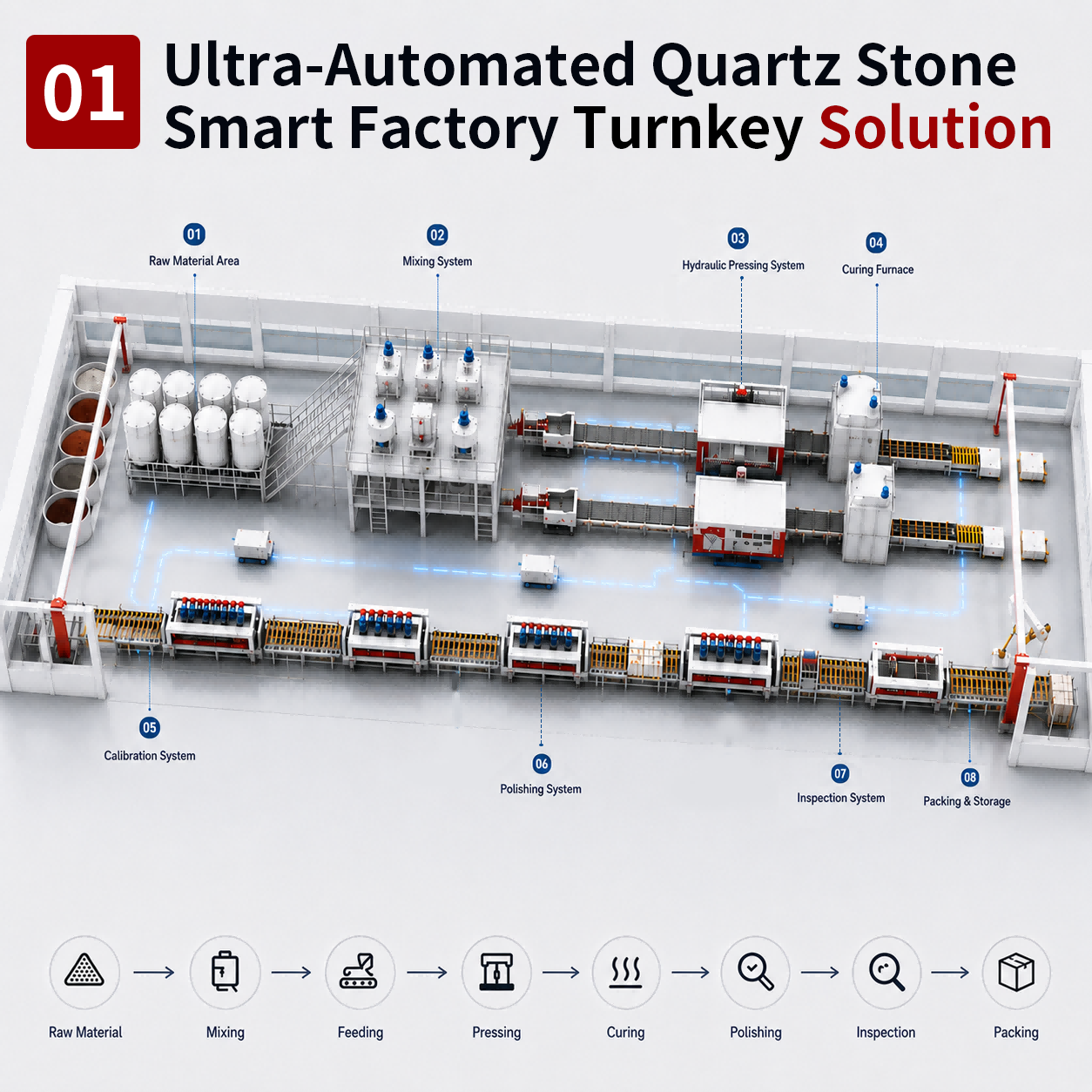
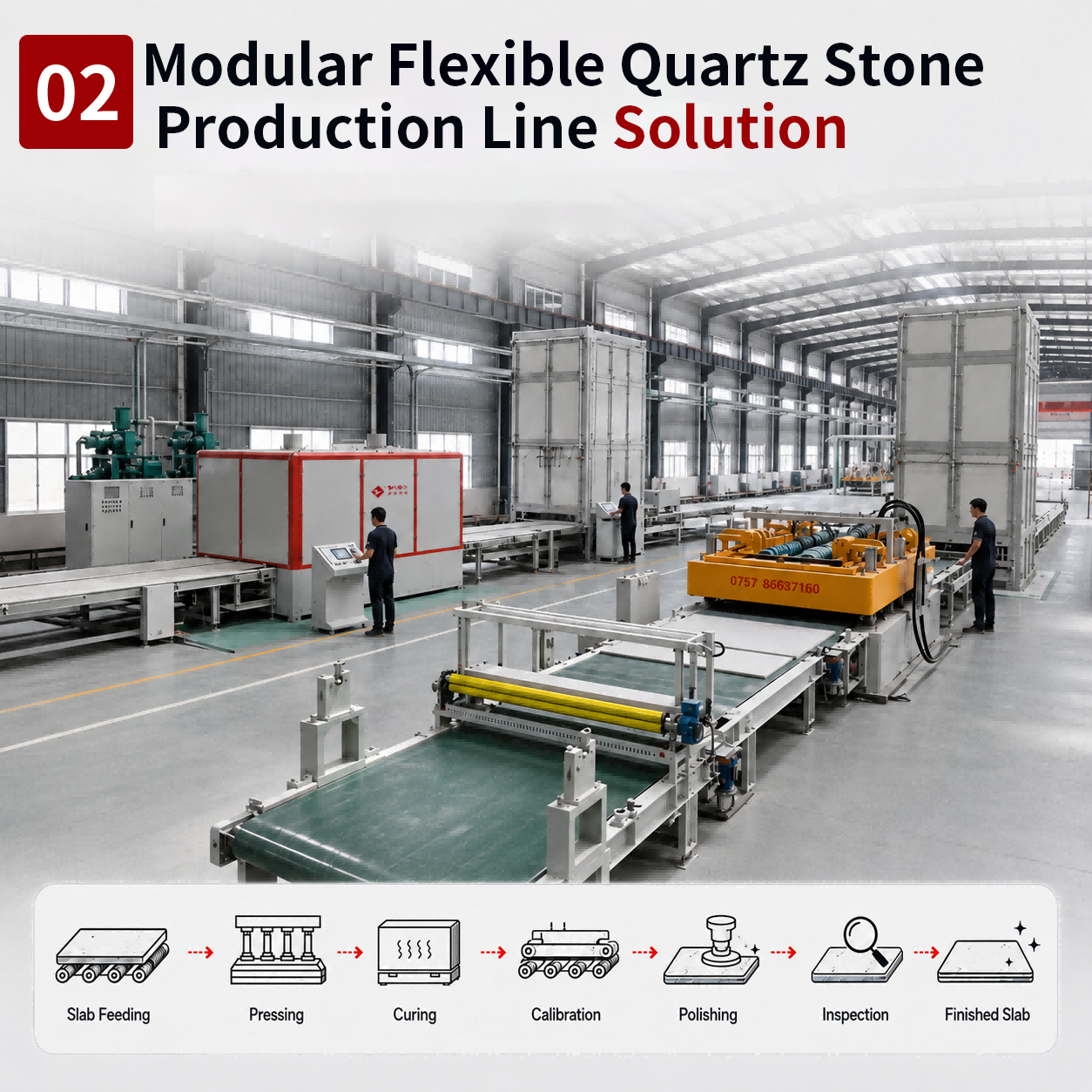
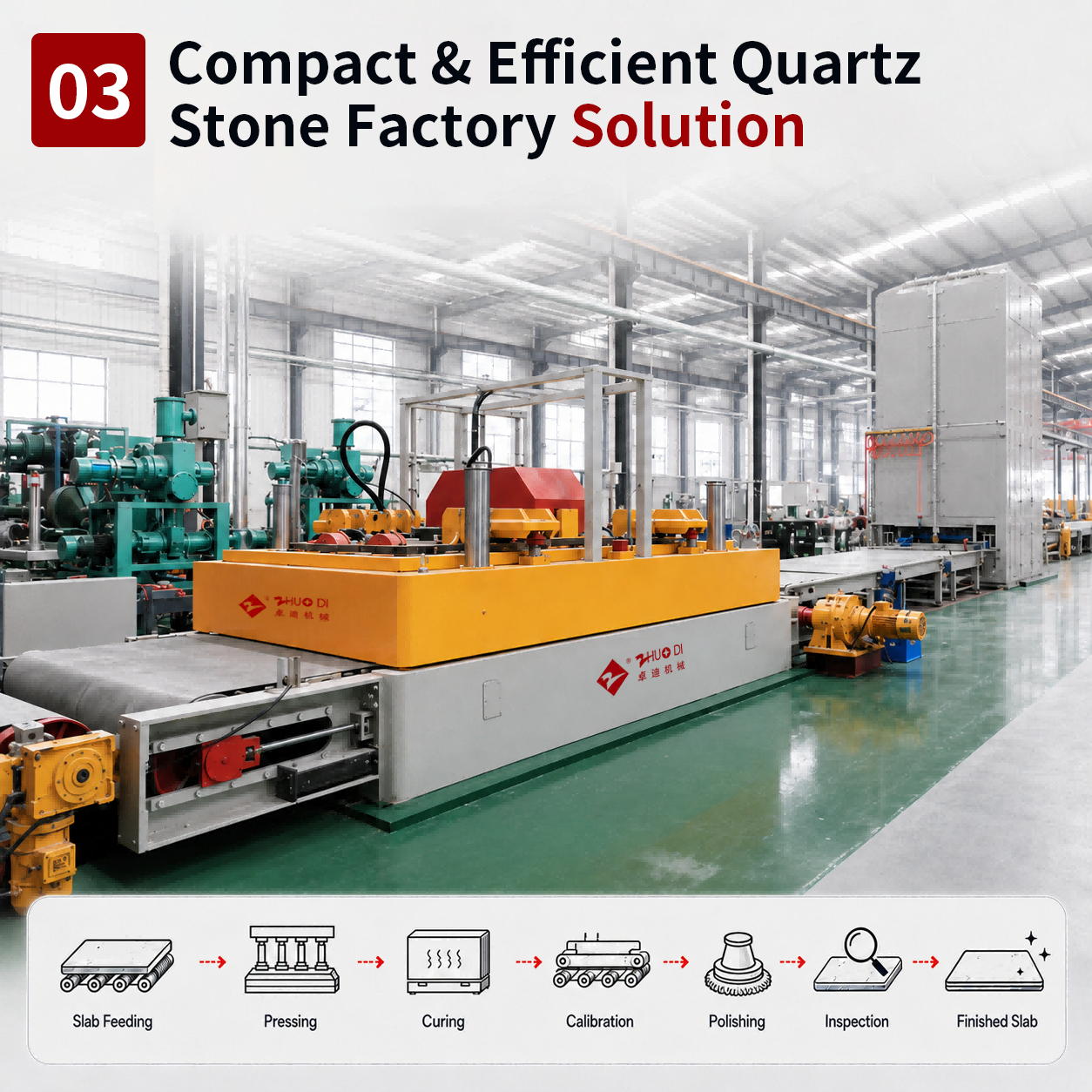
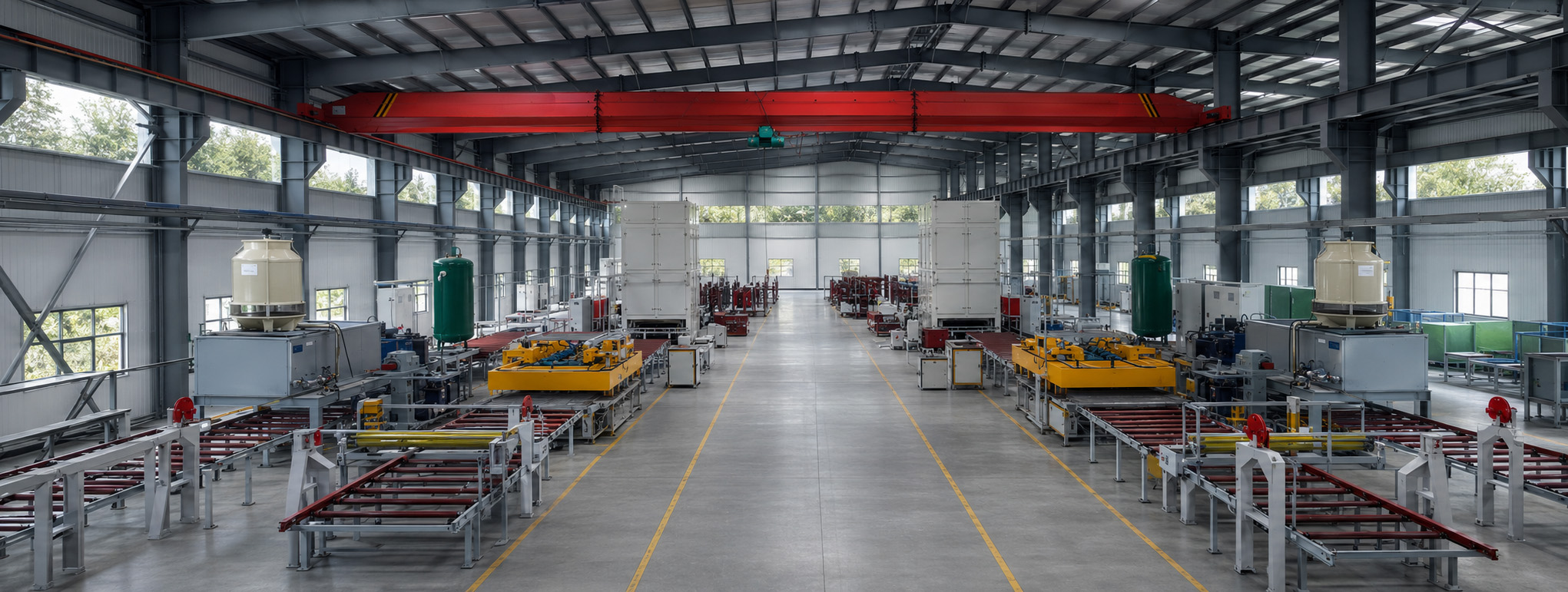
A complete quartz slab factory normally consists of several production stages rather than one machine.
A typical process may include:
Raw material preparation → weighing and feeding → mixing → material distribution → pressing → curing → calibration → polishing → inspection and packing
Each stage affects both the initial investment and the final product quality.
This is why simply asking for “the price of a quartz slab machine” usually does not give an investor a useful budget.
For a new factory project, the supplier should first prepare a machine configuration according to the required slab specification and production capacity.
Machinery is only part of the project.
The factory also needs enough space for:
· Raw material storage
· Production equipment
· Semi-finished slab handling
· Finished slab storage
· Electrical equipment
· Dust collection
· Maintenance access
· Forklift movement
· Loading and unloading
Building costs vary widely by country and should normally be estimated using local construction rates.
The equipment supplier should provide the machine dimensions and recommended production layout. The investor can then calculate the building, foundation and utility costs based on local prices.
A quartz slab production line requires adequate electrical power, water and compressed air.
Before finalizing the project, check:
• Electricity: local voltage, frequency and available transformer capacity.
• Water: required for relevant processing, cooling and finishing operations depending on the production configuration.
• Compressed air: required by pneumatic components and certain production processes.
The exact requirements should be calculated from the final equipment list.
This step is especially important when the factory is being built in a new industrial area where the existing power supply may not be sufficient.
For an overseas project, the equipment price is not the final landed investment.
You should also consider:
· Export packing
· Container loading
· Ocean freight
· Marine insurance where applicable
· Import duties
· Local taxes
· Port charges
· Inland transportation
· Installation
· Commissioning
· Operator training
These costs depend heavily on the destination country.
When comparing quotations from different machinery suppliers, always check what is included and what is not included.
A lower machine quotation does not necessarily mean a lower final project cost.
Working capital is frequently overlooked when planning a new quartz slab factory.
After the machines are installed, the factory still needs money to operate.
Typical working-capital requirements include:
· Quartz raw materials
· Resin
· Pigments
· Consumables
· Packaging
· Electricity
· Water
· Labor
· Spare parts
· Maintenance
· Inventory
· Sales and distribution
A factory that has enough money to purchase equipment but insufficient working capital can face difficulties soon after production begins.
The equipment budget and operating budget should therefore be planned separately.
Without capacity and slab specifications, suppliers can only provide a very rough quotation.
Two quotations may look similar while including completely different equipment, automation levels and services.
Always compare the configuration, not only the final number.
Transformer capacity, foundations, water systems, compressed air and dust collection can become significant project costs.
A larger production line is not automatically a better investment.
The capacity should match the expected market demand and sales plan.
A fast press does not create a high-capacity factory if the mixing, curing or polishing section cannot keep up.
The entire production process should be designed as one system.
There is no single price for every project. The cost depends mainly on slab specifications, required production capacity, automation level and equipment configuration. A supplier needs these basic requirements before preparing an accurate quotation.
At minimum, provide your required slab size, slab thickness, expected production capacity, destination country and preferred level of automation. If the project is still at an early stage, the supplier can help determine a suitable configuration.
The required area depends on production capacity, machine configuration, raw material storage, finished-product storage and material flow. A production layout should be prepared before the factory building is finalized.
In many projects, yes. However, future expansion should be considered when planning the original factory layout, electrical capacity and material-handling system.
The schedule depends on equipment manufacturing, factory construction, shipping, installation and commissioning. These activities should be planned together rather than treating machinery delivery as the entire project schedule.
• If you are preparing to build a new quartz slab factory, send us the basic information about your project:
• Slab size + slab thickness + required daily capacity + destination country
Based on these requirements, our engineering team can recommend a suitable production-line configuration and prepare a preliminary equipment proposal and factory layout for your project.
Submit your factory requirements to get a project-specific solution and quotation.
Last updated: September 10, 2026



© 2026 Zhuodi All Rights Reserved. Privacy Policy
 CONTACT