

Send Inquiry
Build A Complete Quartz Stone Factory,Not Just A Production Line
Before You Build an Engineered Quartz Factory
10 Critical Questions Every Investor Should Answer
A practical guide to market positioning, production capacity, factory planning, process capability, training, delivery, and long-term support.
Introduction
Building an engineered quartz factory is a long-term industrial investment. The equipment matters, but equipment alone does not determine whether the project will reach stable production or produce slabs that meet the target market's requirements.
A successful project connects market strategy, product design, factory layout, process knowledge, equipment configuration, workforce development, and after-sales support. Drawing on nearly 30 years of experience in quartz machinery and slab manufacturing, Zhuodi recommends that investors answer the following ten questions before selecting a production line.
Market positioning should come before equipment selection. A plant serving value and mid-market segments may prioritize repeatable quality, cost control, and volume. A premium producer may need greater flexibility in color development, pattern creation, and surface finishing. Export-oriented factories must also consider the specifications, documentation, and regulatory requirements of each destination market.
Define the target countries, customer groups, slab sizes, product categories, price range, and design direction before finalizing the line. A clear product strategy helps prevent overinvestment in functions the market does not need - or underinvestment in capabilities the market expects.
A larger line does not automatically create a better return. Capacity should reflect expected sales volume, available working capital, labor resources, product mix, and the time required to develop stable distribution channels.
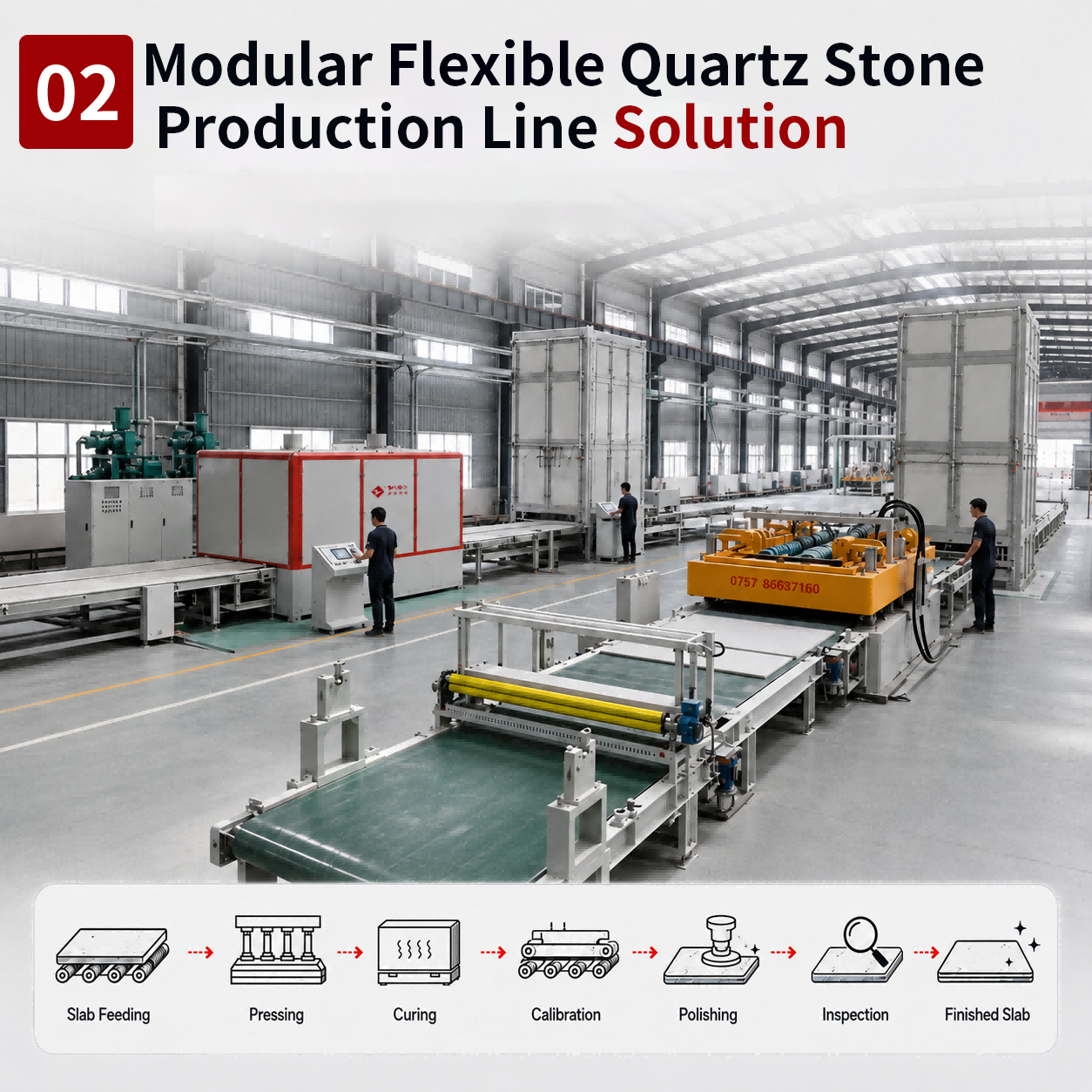
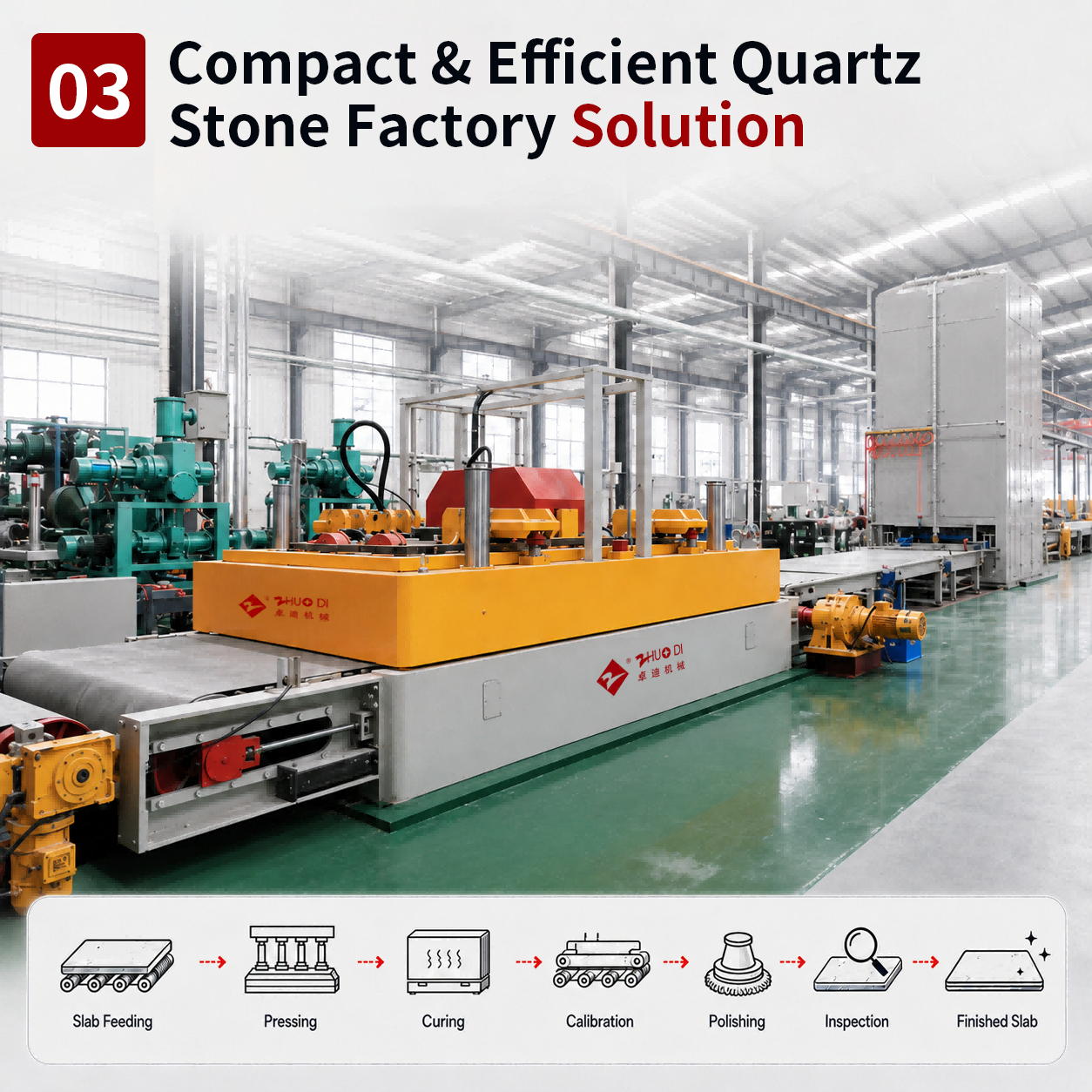
New entrants may benefit from a compact or modular configuration that can expand as demand grows. Established manufacturers with proven sales channels may justify a more automated system. The right choice is the capacity the business can operate, supply, and sell consistently.
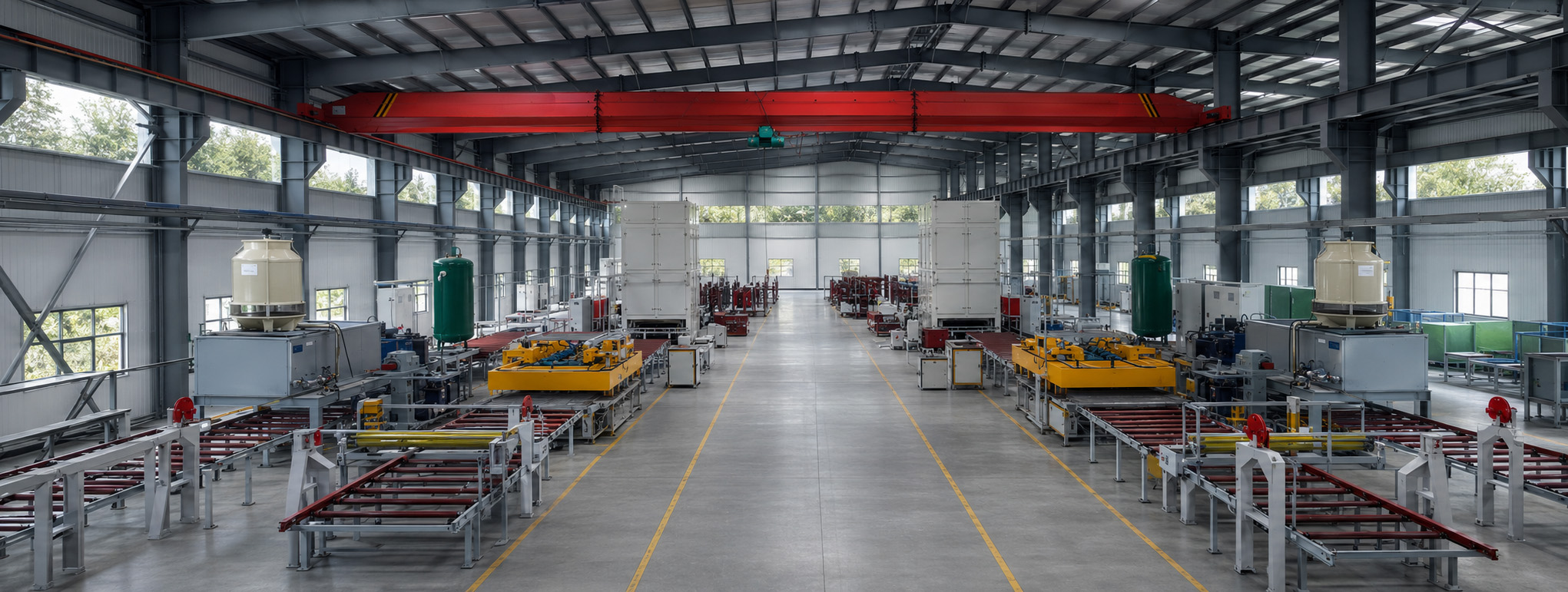
An engineered quartz plant must move raw materials, work in process, finished slabs, people, utilities, and waste through the site safely and efficiently. Poor layout decisions can create unnecessary material handling, difficult maintenance access, bottlenecks, and costly changes after installation.
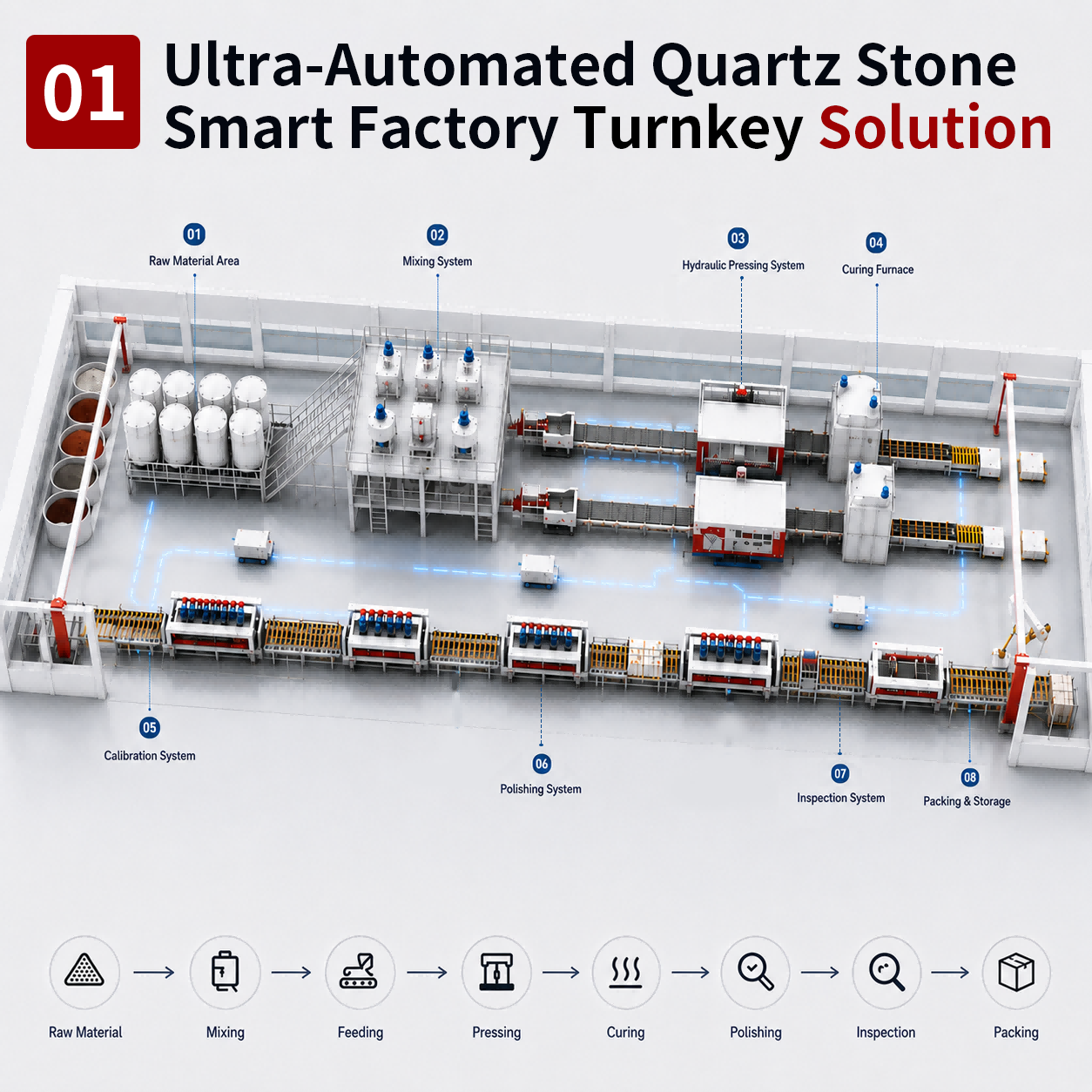
The layout should coordinate raw-material storage, mixing and distribution, vacuum pressing, curing, calibration and polishing, inspection, packaging, warehousing, and shipping. It should also reserve space for utilities, maintenance, future upgrades, and safe operator access.
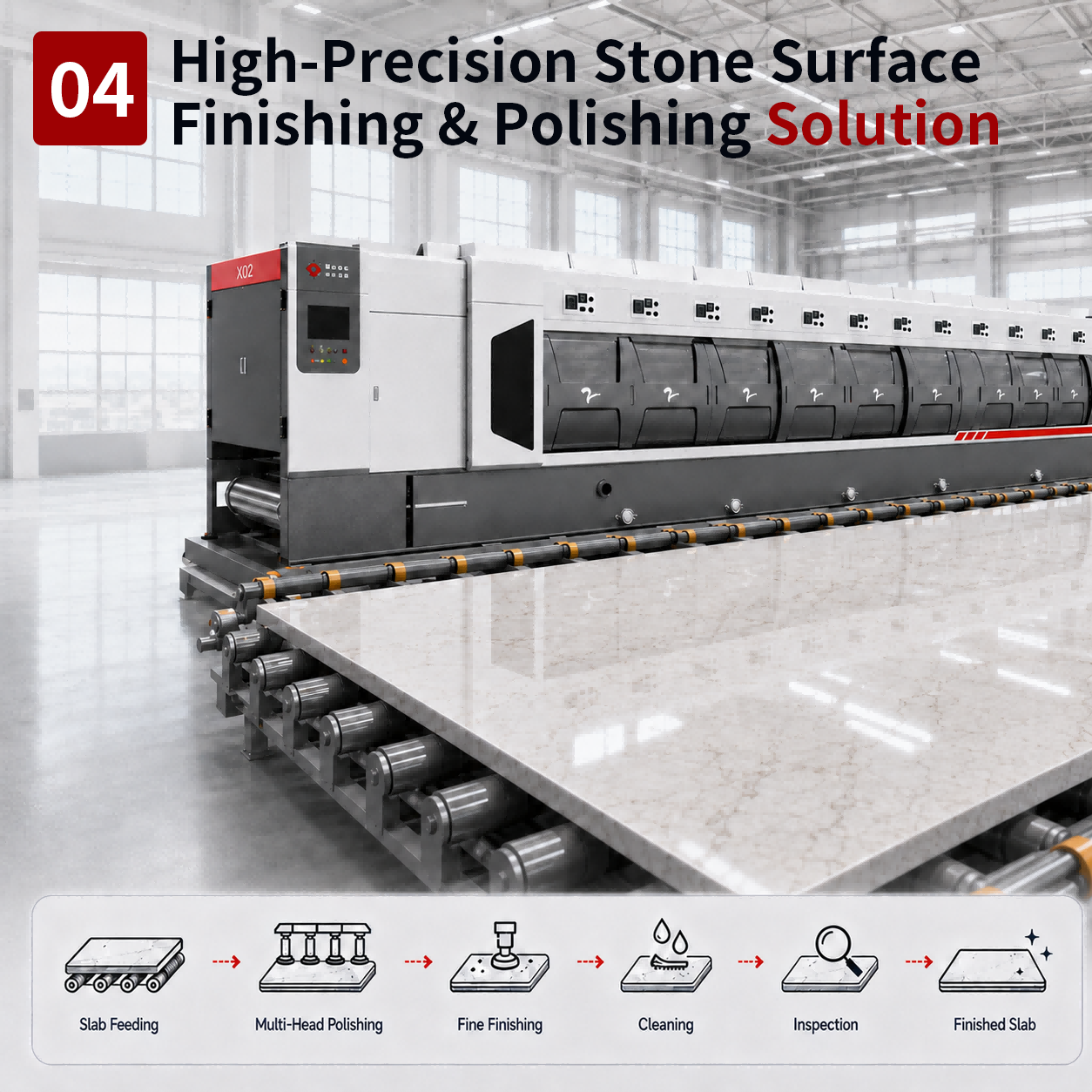
Similar machines can produce different results because slab quality depends on the whole process. Quartz aggregate grading, resin behavior, pigment control, mixing uniformity, vacuum conditions, pressing parameters, curing conditions, and finishing settings all influence the final product.
A supplier should therefore understand more than machine specifications. It should be able to explain how equipment configuration and process control relate to the products the customer plans to manufacture.
New factories need operators who can run the equipment safely, recognize abnormal conditions, follow production procedures, adjust approved settings, perform routine maintenance, and escalate quality problems. Training should be planned before commissioning rather than added after difficulties appear.
A practical training program normally combines on-site instruction during installation, supervised trial production, operating and maintenance documentation, and follow-up technical support. The goal is to help the customer's team develop independent operating capability within the agreed project scope.
Pre-shipment verification reduces the risk of discovering configuration problems after the equipment reaches the site. The customer and supplier should confirm machine models, quantities, key components, contract specifications, manufacturing status, shipping lists, and required documentation before dispatch.
For complex projects, a factory acceptance inspection provides a clear record of what has been built and what remains to be completed before shipment.
Installation is not the end of a production-line project. During startup, the customer may need help with equipment adjustment, process stabilization, troubleshooting, maintenance planning, and spare-parts selection.
The contract should define the service scope, response channels, documentation, spare-parts support, and responsibilities of both parties. Clear expectations are more useful than broad promises of unlimited support.
A running machine is not the same as an accepted production system. The project should include agreed checks for mechanical operation, electrical and safety functions, line coordination, trial production, and finished-slab quality.
Quality indicators may include flexural strength, water absorption, apparent density, surface hardness, stain resistance, dimensional accuracy, and visual appearance. The applicable test methods, sampling rules, target values, and acceptance conditions must be defined in the technical agreement for the specific product and project.
Equipment engineering and slab manufacturing answer different questions. Engineering determines how a line is designed, built, controlled, and maintained. Production experience shows how raw materials, formulations, parameters, operators, and quality controls interact in daily manufacturing.
Zhuodi's dual-factory model connects these two perspectives: one facility focuses on quartz machinery and production-line engineering, while the other supports process validation, slab production, product development, and practical training.
Price is important, but the lowest equipment price does not necessarily create the lowest project risk. Investors should also assess engineering capability, relevant project experience, manufacturing controls, delivery procedures, training resources, documentation, and after-sales support.
A responsible supplier should provide a clearly defined path from planning and manufacturing through installation, commissioning, training, and production acceptance.
The strongest engineered quartz projects begin with the right questions. When market strategy, capacity, layout, process capability, equipment, people, and delivery standards are planned as one system, investors are better positioned to control risk and build a factory that can improve over time.
Next step: Planning an engineered quartz factory? Talk to Zhuodi's engineering team about your target products, site conditions, capacity requirements, and project schedule.



© 2026 Zhuodi All Rights Reserved. Privacy Policy
 CONTACT