


Send Inquiry
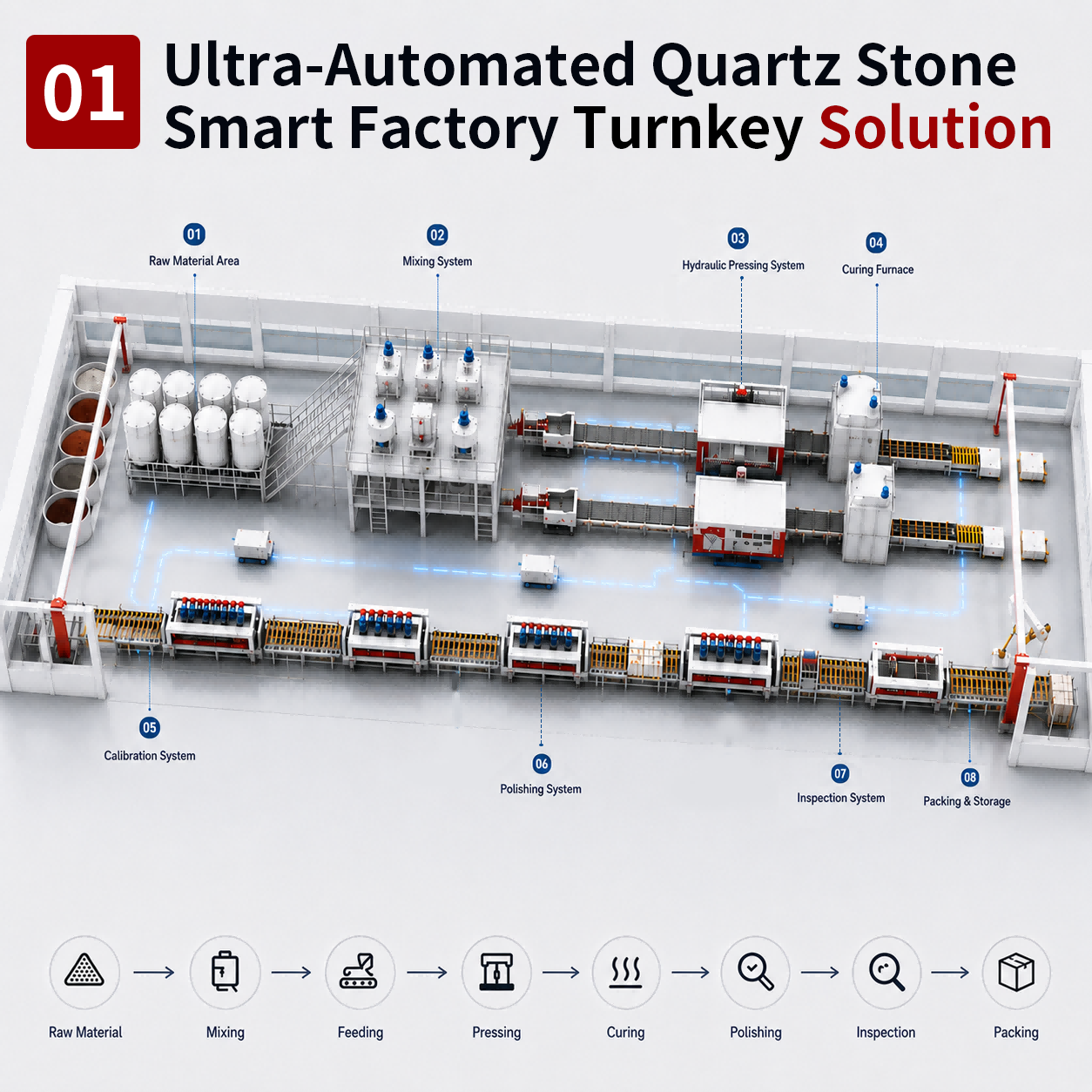
Build A Complete Quartz Stone Factory,Not Just A Production Line
Why Similar Quartz Production Equipment Can Produce Different Results
The Process Factors Behind Quartz Slab Quality
How raw materials, mixing, pressing, curing, finishing, operators, and quality control shape production consistency.
Two factories can install similar quartz production equipment and still produce slabs with noticeably different density, color consistency, surface quality, and defect rates. The reason is straightforward: equipment provides production capability, but finished-slab performance depends on how the entire manufacturing process is controlled.
Engineered quartz manufacturing combines materials, machinery, formulations, operating parameters, people, and quality management. A weakness in any one of these areas can affect the result, even when the individual machines are functioning correctly.
Engineered quartz slabs typically use quartz sands, resin, pigments, and additives. Their characteristics must be suitable for the intended product and compatible with the selected process.
Important variables include sands particle-size distribution, moisture and contamination control, resin properties, pigment consistency, additive dosage, and storage conditions. A stable incoming-material system reduces unnecessary variation before production begins.
The formulation determines how the components work together, while mixing determines how evenly they are distributed. Inconsistent weighing, poor mixing sequences, unsuitable mixing time, or uncontrolled material temperature can contribute to color variation, weak areas, uneven texture, or unstable processing behavior.
Effective mixing aims for uniform resin distribution, consistent pigment dispersion, and repeatable preparation of the material before distribution and pressing. The correct settings depend on the formulation, product design, batch size, and equipment configuration.
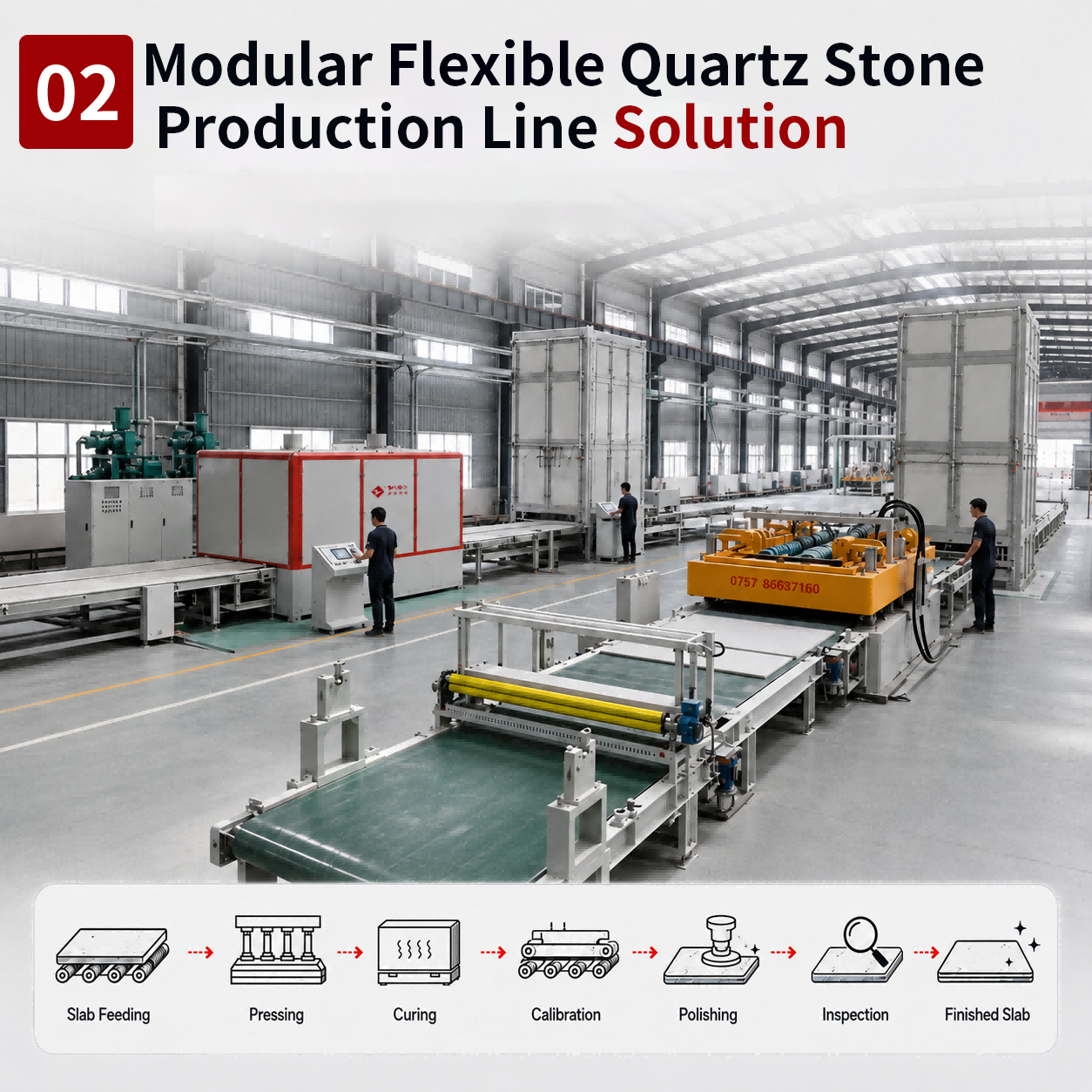
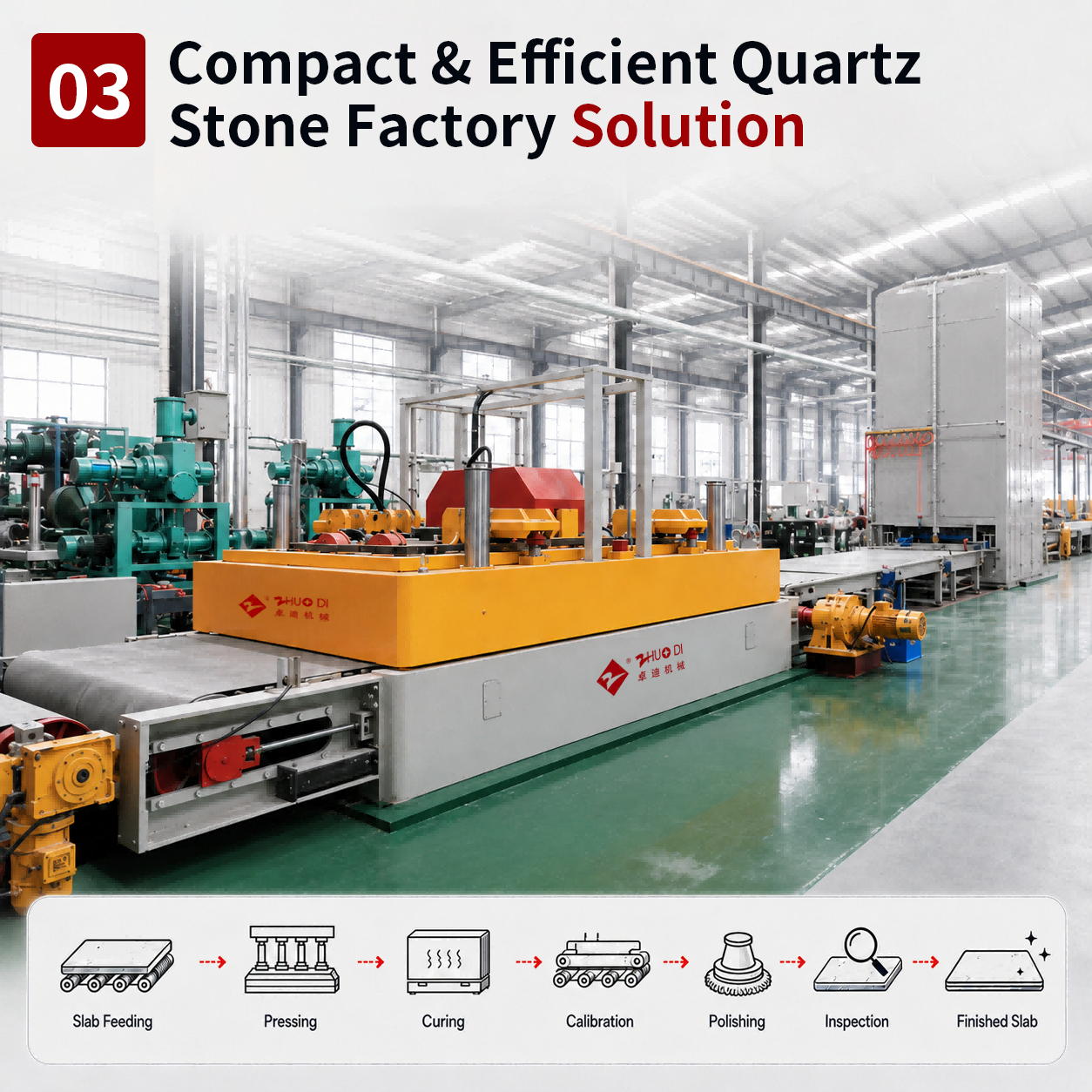
Material distribution influences thickness, pattern placement, and the visual character of the slab. Vacuum pressing then consolidates the material through a controlled combination of vacuum, vibration, pressure, time, and mold conditions.
When these stages are not coordinated, the slab may show trapped air, localized density differences, microcracks, weak edges, or inconsistent patterns. Stable results require both capable equipment and disciplined control of the operating window.
Curing develops the final properties of the resin system. Temperature distribution, residence time, slab thickness, conveyor speed, and loading conditions must be controlled as a connected process.
Under-curing or uneven curing can contribute to deformation, insufficient mechanical performance, difficult fabrication, or instability during later finishing. The appropriate curing profile should be established for the specific formulation and slab design rather than copied from an unrelated product.
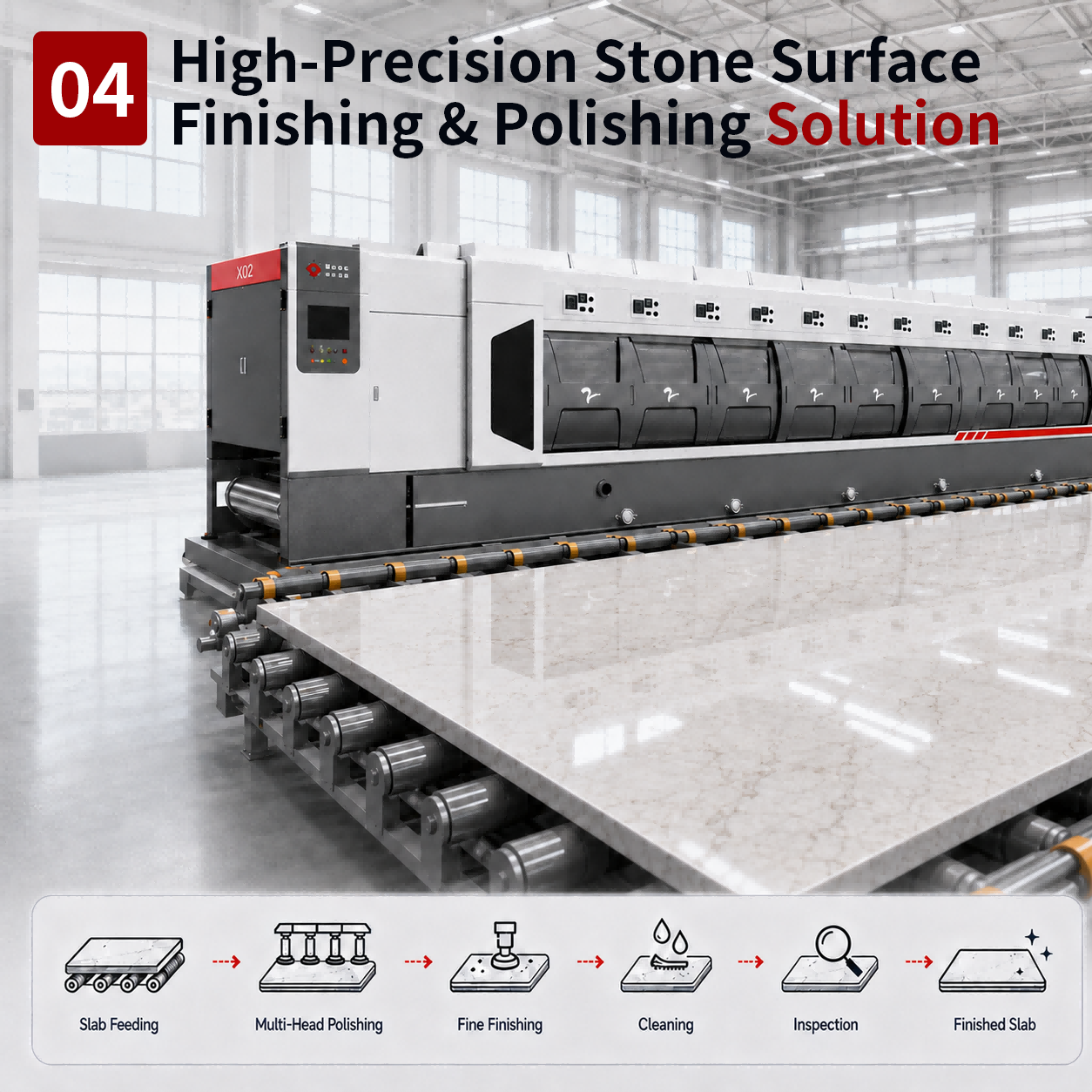
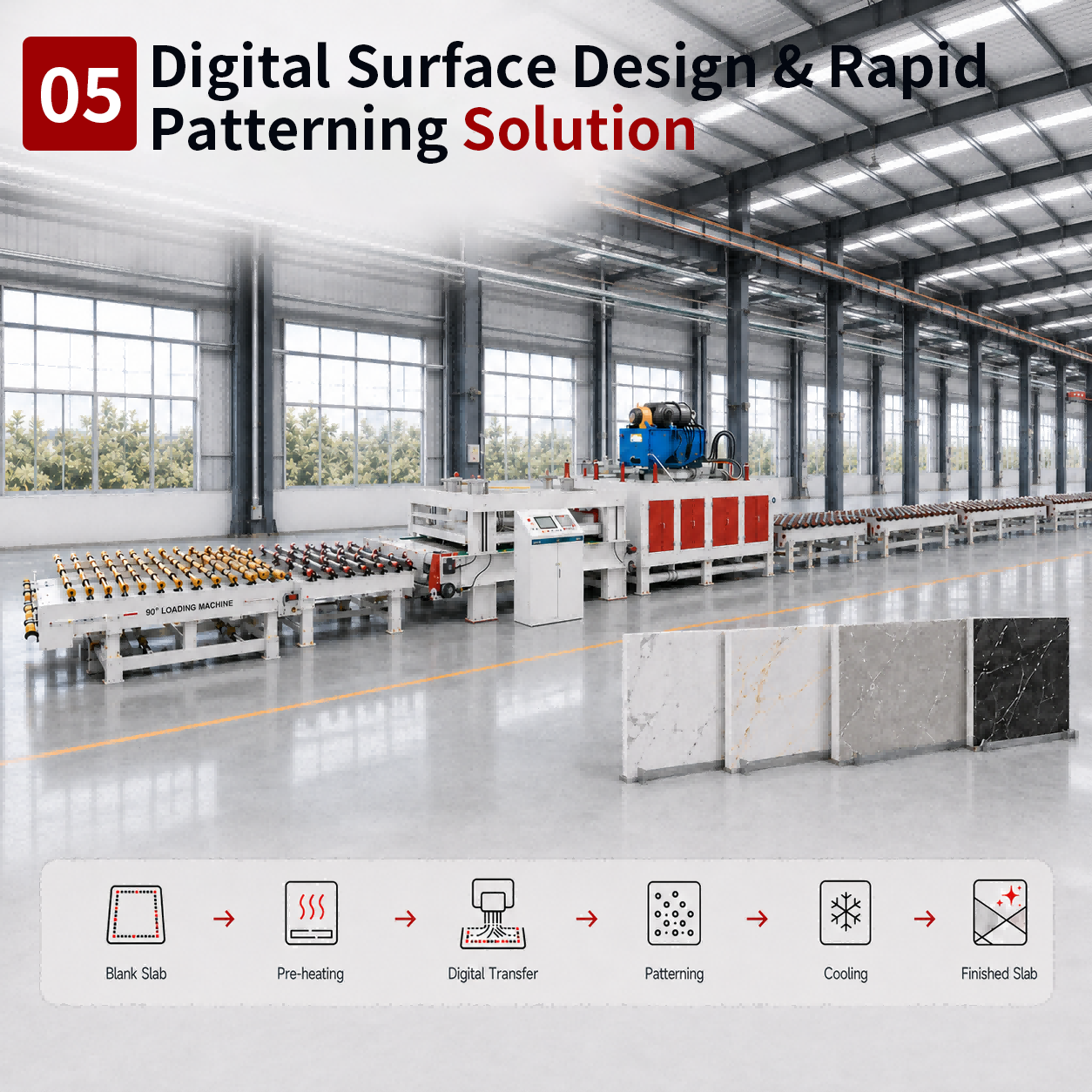
Calibration establishes slab thickness and flatness before polishing. Polishing quality depends on machine condition, abrasive sequence, pressure, feed speed, water supply, and consistent contact across the surface. Decoration processes add another layer of control for color, pattern placement, and repeatability.
Different finishing and decoration processes can position similar base slabs at different price points, but surface appearance should not be separated from structural quality. A visually attractive slab must still meet the agreed dimensional and performance requirements.
Experienced operators do more than start and stop machines. They follow approved procedures, monitor trends, recognize abnormal conditions, document changes, and coordinate with quality and maintenance teams.
A practical quality system should control incoming materials, formulations, key process parameters, inspection records, nonconforming products, maintenance, and corrective actions. This turns isolated production know-how into a repeatable manufacturing capability.
When evaluating a quartz production-line supplier, ask not only what the machines can do, but also how the supplier will support process definition, commissioning, operator training, documentation, trial production, and acceptance.
The best results come from aligning equipment with the target product and building a controlled process around it. This is why similar machines can produce different outcomes - and why process expertise remains essential after installation.
Next step: Need to match a production line to a specific quartz product? Zhuodi can review your target slab designs, raw-material plan, production capacity, and factory conditions.



© 2026 Zhuodi All Rights Reserved. Privacy Policy
 CONTACT